Have you ever scrolled through a late-night feed, stumbled upon some ancient prophecy, and found yourself wondering, “Could there be more to these old stories than we think?” I know I have!

There’s just something inherently captivating about tales of enigmatic beings, especially when they blur the lines between myth and a hidden reality. Today, we’re diving deep into one of history’s most debated and utterly fascinating subjects: the Nephilim and the long-whispered notion of angels’ descendants walking among us.
For centuries, these “giants” or “fallen ones” have ignited endless speculation, fueling imaginations from ancient texts to the latest blockbuster movies and viral conspiracy theories.
What exactly happened when the “sons of God” encountered the “daughters of men”? Was it a literal intermingling of the divine and human, creating a powerful, formidable race, or does this ancient narrative hold a deeper, more symbolic truth about humanity’s ambition and the pursuit of forbidden knowledge?
It’s a question that resonates even more powerfully in our high-tech world, where ethical boundaries are constantly tested and the very fabric of our origins is often re-examined through a modern lens.
The enduring mystery and cultural impact of the Nephilim are undeniable, reminding us that some secrets are too compelling to stay buried in the dust of history.
Join me as we journey through history and unearth the intriguing possibilities. Let’s peel back the layers and discover exactly what these ancient accounts might mean for us today.
Unearthing the Ancient Echoes: Genesis and Beyond
It’s truly mind-boggling how some stories, no matter how ancient, just refuse to fade away. When I first stumbled upon the verses in Genesis 6, talking about the “sons of God” and “daughters of men,” creating the Nephilim, I had this immediate rush of fascination.
You know that feeling, right? Like you’ve just found a hidden passage in an old house, and you desperately want to see what’s inside. This isn’t just some obscure historical footnote; it’s a narrative that has echoed through countless cultures and religious traditions, sparking debates that continue to this very day.
What makes this particular account so sticky, so utterly captivating? I think it taps into a primal human curiosity about origins, about power, and about what happens when boundaries – whether divine or human – are crossed.
It’s a story that challenges our understanding of reality, pushing us to consider possibilities far beyond the mundane. When I dig into these texts, I don’t just see words on a page; I see a vibrant tapestry of human history, belief, and the unending quest for meaning in a world that often feels both too small and infinitely vast.
The Genesis Enigma: A Biblical Deep Dive
The primary source for the Nephilim narrative is, of course, the Book of Genesis, specifically chapter 6, verses 1-4. It’s a remarkably brief passage, yet its implications are monumental.
The text states, “When human beings began to increase in number on the earth and daughters were born to them, the sons of God saw that the daughters of humans were beautiful, and they married any of them they chose.” And then, critically, “The Nephilim were on the earth in those days—and also afterward—when the sons of God went to the daughters of humans and had children by them.
They were the heroes of old, men of renown.” This snippet, often presented almost as an aside before the flood narrative, feels like a tantalizing peek behind a curtain.
It leaves so much unsaid, so much to the imagination, which is precisely why it’s become such fertile ground for theories and interpretations. As someone who loves a good mystery, this part of the Bible has always stuck with me, posing more questions than answers.
It forces you to ask: what exactly was happening here?
Echoes in Other Ancient Texts
What truly broadened my perspective was discovering that this isn’t an isolated incident confined to just one religious text. Similar accounts of divine-human intermingling, giant offspring, or semi-divine heroes appear in a remarkable array of ancient mythologies from around the globe.
Think about the Titans of Greek myth, born from primordial gods, or the powerful demigods like Hercules. Even in the Mesopotamian epics, we find tales of beings with extraordinary strength and unusual origins, blurring the lines between mortals and the divine.
From my own research, it seems like there’s an almost universal human impulse to explain unusual phenomena or powerful individuals by attributing them to a supernatural lineage.
It makes you wonder if these shared themes are just coincidental archetypes, or if they point to some deeper, perhaps forgotten, historical event or cultural memory.
I’ve always found it fascinating how ancient peoples, despite vast geographical distances, often came up with strikingly similar narratives to explain the inexplicable.
Giants Among Us: The Physicality of Ancient Beings
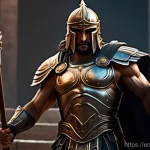
When we talk about the Nephilim, one of the first images that typically springs to mind is “giants.” The very word conjures up monumental figures, beings of immense stature and formidable strength, quite unlike anything we encounter in our daily lives.
I remember reading stories as a kid about giants in fairy tales, and the sheer scale of them was always so intimidating and awe-inspiring. This ancient narrative taps into that very primal sense of wonder and fear.
It’s not just about a difference in size; it implies a profound difference in capability, perhaps even a different order of existence. Imagine standing before something truly colossal, something that makes you feel utterly insignificant.
That’s the emotional resonance that the idea of the Nephilim as physical giants evokes. It paints a picture of a world where humanity wasn’t always at the top of the food chain, or at least, not the dominant physical force.
Descriptions of Stature and Power: What Did They Look Like?
While the biblical text in Genesis is brief, other ancient texts, particularly the Book of Enoch, delve into more vivid descriptions of these Nephilim.
They’re often depicted as beings of tremendous size, sometimes described as reaching heights that dwarf mountains, with strength to match. We’re talking about figures that could easily uproot trees or hurl boulders.
These aren’t just big people; they are presented as a force of nature in human-like form, capable of great feats and, unfortunately, often great destruction.
It makes you wonder about the practicalities of such beings existing. How did they interact with the environment? What kind of society would they build?
The imagery is so powerful that it makes their presence feel incredibly real, even if it’s confined to the realm of ancient literature. For me, the sheer scale of their existence raises profound questions about the limits of biology and the possibilities of ancient life forms.
Fear and Lore: Their Impact on Early Human Societies
It’s easy to imagine the terror and awe these beings would inspire in early human societies. A single Nephilim could potentially represent a devastating force, capable of overwhelming entire settlements.
This fear would undoubtedly lead to the creation of elaborate myths and legends, passed down through generations, shaping cultural norms and religious beliefs.
I can almost picture the hushed whispers around ancient campfires, tales of these mighty ones, cautionary stories designed to warn or perhaps even inspire.
Their legacy, whether literal or metaphorical, clearly left an indelible mark on the collective consciousness of the ancient world. The memory of powerful, non-human entities interacting with mankind would have been a foundational element of their worldview, influencing everything from their architecture to their social structures.
The stories of these giants weren’t just entertainment; they were explanations for an often-unexplainable world.
The Mystery of the “Sons of God”: Who Were They, Really?
This is where the debate truly heats up and where I find myself getting lost in the various interpretations, each more intriguing than the last. The phrase “sons of God” is the linchpin of the entire Nephilim narrative, and its meaning is far from universally agreed upon.
Was it a literal descriptor of divine beings? A poetic term for a specific human lineage? Or something else entirely?
The way we interpret this phrase fundamentally alters our understanding of the Nephilim and the broader implications of the Genesis account. It’s like a choose-your-own-adventure book, but with ancient theology and cosmic consequences.
I’ve spent countless hours poring over commentaries and discussions, trying to piece together the most compelling argument, and honestly, the sheer variety of scholarly and theological perspectives is astounding.
It’s a testament to the enduring power of these ancient words that they can still provoke such intense and varied thought.
The Angelic Interpretation: Fallen Angels and Forbidden Unions
Perhaps the most dramatic and widely known interpretation is that the “sons of God” were indeed heavenly beings, specifically a group of fallen angels.
This view posits that these angels, succumbing to lust or a desire to corrupt humanity, descended to Earth and had physical relations with human women, resulting in the Nephilim.
This interpretation gains significant traction from texts like the Book of Enoch, which explicitly details the transgression of these “Watchers” and their role in introducing forbidden knowledge and violence to the world.
For many, this explanation provides a clear theological framework for divine judgment and the corruption that necessitated the Great Flood. It paints a vivid picture of cosmic rebellion and its earthly consequences.
From my personal perspective, this theory certainly adds a layer of epic tragedy and moral complexity to the story, turning it into a narrative about cosmic good versus evil.
Human Lineage Theories: Sons of Seth or Powerful Rulers?
On the other hand, a substantial body of interpretation suggests a purely human origin for the “sons of God.” One prominent theory identifies them as the righteous lineage of Seth, the son of Adam, who maintained a pious walk with God.
According to this view, their intermarriage with the “daughters of men” (descendants of Cain or other unrighteous lines) represented a spiritual compromise, a blurring of the lines between sacred and profane, leading to widespread corruption and the eventual need for the Flood.
Another compelling human theory proposes that the “sons of God” were powerful, tyrannical rulers or kings who, perhaps in a display of their own perceived divinity or authority, took many wives and established a ruling elite that oppressed the common people.
This interpretation sees the Nephilim not as literally giant demi-gods, but as powerful, perhaps unusually large or strong, offspring of these dominant figures, “men of renown” in a more political or military sense.
This perspective grounds the narrative firmly within human history and social dynamics.
| Interpretation of “Sons of God” | Description | Implication for Nephilim |
|---|---|---|
| Fallen Angels (Watchers) | Heavenly beings who descended to Earth and procreated with human women, transgressing divine boundaries. | Literal hybrid offspring with supernatural strength and destructive tendencies, linked to cosmic rebellion. |
| Lineage of Seth | Pious descendants of Adam through Seth who maintained a righteous walk, but later intermarried with unrighteous human lines. | Product of spiritual compromise, leading to corruption within humanity, signifying a decline in faith rather than literal divine intervention. |
| Tyrannical Rulers / Elite | Powerful human kings, nobles, or rulers who amassed power, took many wives, and were seen as divine by their subjects. | Offspring were powerful, perhaps physically imposing, “men of renown” due to their social status, strength, or military prowess, but fully human. |
Cultural Footprints: Nephilim in Mythology and Modern Lore
It’s truly remarkable how a few verses in an ancient text can explode into such a vast and varied cultural phenomenon. The Nephilim narrative isn’t just confined to theological debates; it has seeped into the very fabric of human storytelling, influencing everything from ancient epics to the latest blockbuster movies and video games.
I mean, think about it – the concept of a powerful, enigmatic race born from an unnatural union resonates with something deep within our collective psyche.
It’s a trope that hits on themes of forbidden love, superhuman abilities, and the consequences of messing with forces beyond our understanding. Whenever I see a story involving ancient, powerful beings with mysterious origins, my mind immediately jumps back to the Nephilim.
It feels like this story, regardless of its literal truth, has provided a foundational myth for countless creative works across millennia.
Ancient Legends and Parallel Myths
As I mentioned earlier, the Nephilim story doesn’t exist in a vacuum. Ancient cultures across the globe have their own versions of “giants” or “demigods” born from the union of divine and human entities.
From the Annunaki of Sumerian mythology, sometimes interpreted as powerful beings who influenced early human civilization, to the Jotnar (giants) in Norse mythology, who often clashed with the gods, the parallels are striking.
Even within Abrahamic traditions, post-Flood narratives in Numbers and Deuteronomy refer to various giant races like the Anakim and Rephaim, often associated with the Nephilim through later interpretations.
It makes me wonder if there was some shared ancestral memory, or perhaps simply a universal human fascination with the idea of beings who transcend our normal limitations.
When you look at how widespread these narratives are, it really makes you pause and consider what might have inspired them all.
Modern Pop Culture: From Novels to Blockbusters
Fast forward to today, and the Nephilim are having a serious moment in pop culture. They’ve gone from ancient scripture to being featured in best-selling urban fantasy novels, high-octane action films, and even popular video game franchises.
Think about Cassandra Clare’s “Mortal Instruments” series, where Nephilim are demon-hunting Shadowhunters, or certain fantasy games where they appear as formidable enemies or enigmatic allies.
The appeal is obvious: they offer a ready-made mythology for powerful, often conflicted, characters who exist on the fringes of human understanding. Filmmakers and authors love to play with the idea of a hidden race, a secret history, and the Nephilim provide a perfect canvas for exploring those themes.
Personally, I get a kick out of seeing how modern storytellers adapt and reimagine these ancient concepts, breathing new life into stories that have captivated humanity for thousands of years.
It really proves that some mysteries are just too good to ever completely die out.
Forbidden Knowledge: The Ethical Quandaries of Ancient Intermingling
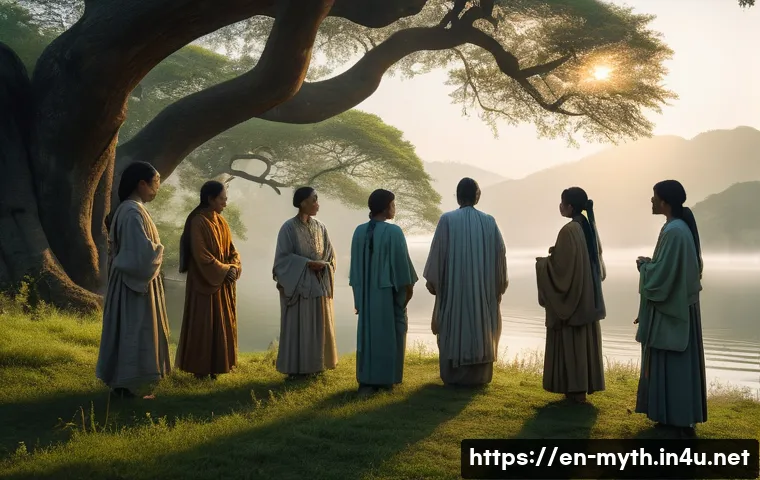
Beyond the fascinating accounts of giants and divine unions, the Nephilim narrative also serves as a potent reminder of the concept of forbidden knowledge and the perilous ethics of crossing established boundaries.
It’s not just about who these beings were, but what their existence represented in the cosmic order. When I think about the story, it always brings me back to the idea that some actions have truly monumental consequences, impacting not just individuals but entire generations, even the very fabric of the world.
It’s a profound warning embedded in the deepest layers of human history, a cautionary tale about hubris and the dangers of pursuing power or pleasure without regard for divine or natural laws.
This is where the story shifts from mere historical curiosity to a powerful ethical dilemma that still resonates today, as we grapple with the implications of our own technological and scientific advancements.
The Link to the Deluge: Divine Retribution
One of the most profound connections in the Nephilim narrative is its proximity to the story of the Great Flood. In Genesis, the rise of the Nephilim and the widespread corruption of humanity are presented almost as direct precursors to God’s decision to cleanse the Earth.
The text states, “The Lord saw how great the wickedness of the human race had become on the earth, and that every inclination of the thoughts of the human heart was only evil all the time.” Many interpretations link the Nephilim’s unnatural birth and their actions directly to this escalating wickedness, suggesting that their very existence was an affront to the divine order, contributing to the conditions that necessitated the Flood.
It’s a stark portrayal of divine judgment, emphasizing that certain transgressions have cataclysmic consequences. It makes you realize the weight of these ancient tales and how they sought to explain profound suffering and societal collapse through a moral lens.
Modern Ethics: What Ancient Warnings Tell Us Today
It might seem like these ancient stories are far removed from our modern lives, but I’d argue they’re more relevant than ever. In our rapidly advancing world, where genetic engineering, artificial intelligence, and deep-space exploration are becoming realities, we are constantly pushing the boundaries of what is possible.
The Nephilim story, regardless of its literal truth, serves as an ancient parable about the dangers of unchecked ambition and the ethical complexities that arise when we meddle with fundamental aspects of life and creation.
It prompts us to ask: What are the limits? Are there lines we should not cross, even if we have the capability? The tale encourages us to reflect on the potential unforeseen consequences of our actions, reminding us that power without wisdom can lead to chaos.
From my perspective, it’s a timeless warning to consider the moral implications before we leap into the unknown.
Decoding the Narrative: Symbolic Truths or Literal History?
This is probably the biggest question that keeps me coming back to the Nephilim story again and again. Is this account a record of literal, historical events – giant, half-divine beings walking the earth?
Or is it a rich tapestry of symbolism, allegory, and ancient metaphor, designed to convey profound spiritual or ethical truths? Honestly, it’s a debate that pits the literalist against the allegorist, and both sides have incredibly compelling arguments.
What I find so fascinating is that even if we can’t definitively prove one over the other, the very act of wrestling with these interpretations deepens our understanding of ancient cultures, their beliefs, and the ways they made sense of a world that was, to them, filled with wonders and terrors.
It’s a mental workout, trying to see the story through different lenses, and I genuinely believe that’s where the true learning happens.
Allegorical Readings: A Story of Human Corruption
Many scholars and theologians lean towards an allegorical or symbolic interpretation of the Nephilim narrative. In this view, the “sons of God” might represent the spiritual aspect of humanity, while the “daughters of men” symbolize the carnal or earthly desires.
Their union and the birth of the Nephilim then become a powerful metaphor for the corruption of the human spirit, where divine potential is perverted by earthly lusts and ambitions.
The “giants” wouldn’t be physical titans but rather metaphorical giants of wickedness, pride, or rebellion, whose influence spread corruption across the land.
This reading often connects to broader themes of human free will, the fall from grace, and the constant struggle between our higher and lower natures.
It’s a way of understanding the story that focuses on its moral and spiritual lessons, rather than its historical facticity, and it certainly gives the text a deeper, more philosophical resonance.
Searching for Physical Evidence: Archaeological Pursuits
On the other side of the coin are those who seek literal, physical evidence of the Nephilim. This often involves discussions around archaeological discoveries of unusually large skeletal remains, ancient megalithic structures that seem to defy conventional human construction capabilities, or anomalies in the fossil record.
While mainstream archaeology typically provides natural explanations for these phenomena – like the misidentification of large animal bones, geological formations, or advanced ancient engineering techniques – the allure of finding concrete proof of giants remains incredibly strong for many.
I’ve definitely gone down the rabbit hole of watching documentaries and reading articles about alleged giant skeletons unearthed around the world. While I remain a healthy skeptic, I can’t deny the thrill of the possibility.
It speaks to our inherent desire for tangible proof, for something that can undeniably bridge the gap between myth and reality. The search itself, even if fruitless, fuels our imagination and our drive to uncover the secrets of the past.
Why These Ancient Stories Still Haunt Our Imagination
It’s amazing, isn’t it? Thousands of years after these narratives were first penned, they continue to captivate, puzzle, and sometimes even frighten us.
The Nephilim story isn’t just an academic curiosity for dusty old scrolls; it’s a living, breathing part of our cultural consciousness, constantly re-emerging in new forms.
I often find myself wondering why this particular tale has such staying power, why it resonates so deeply across generations and diverse cultures. I think it taps into some fundamental aspects of the human condition – our fear of the unknown, our fascination with power, and our endless quest to understand our origins and place in the cosmos.
It’s a story that challenges our understanding of what’s possible, blurring the lines between the mundane and the miraculous, and that’s a space where human imagination thrives.
Our Fascination with the Unknown
Let’s be honest, there’s something irresistibly alluring about a good mystery, especially when it hints at hidden truths or secret histories. The Nephilim saga is dripping with the unknown: who exactly were the “sons of God”?
What was life like when these powerful beings roamed the Earth? What forbidden knowledge did they possess? These questions ignite our innate curiosity, driving us to speculate, research, and theorize.
It’s the same impulse that makes us look up at the stars and wonder if we’re alone, or ponder ancient ruins and imagine the lives of those who built them.
The Nephilim provide a fertile ground for these grand, unanswered questions, allowing us to project our own curiosities and wonderings onto an ancient, enigmatic past.
For me, the sheer ambiguity of the story is its greatest strength, inviting endless exploration.
Reflecting on Our Own Place in the Cosmos
Ultimately, stories like the Nephilim narrative also serve as a profound mirror, reflecting our own anxieties and aspirations about humanity’s place in the universe.
If there were once beings of such immense power and strange origins, what does that say about our current understanding of reality? Does it open the door to other possibilities, other dimensions of existence that we are only beginning to comprehend?
It prompts us to consider the fragile boundaries between the natural and the supernatural, and how our perception of the world might be limited. As I reflect on these ancient tales, I can’t help but feel a sense of humility and wonder, realizing that the universe might hold far more mysteries than we can ever imagine.
It’s a reminder that sometimes, the most enriching journeys are those that challenge our preconceptions and push us to look beyond the ordinary.
Closing Thoughts
It’s truly incredible how these ancient narratives, like the story of the Nephilim, continue to spark such intense curiosity and debate, even thousands of years after they were first written down.
Diving into this topic has been a journey through history, theology, and the very depths of human imagination, constantly challenging me to look beyond the surface.
What I’ve come to appreciate most is not just the mystery itself, but the way these stories compel us to think critically, to question our assumptions, and to explore the profound questions about our origins and our place in the grand tapestry of existence.
It’s a testament to the enduring power of myth and the human quest for meaning that a few lines in an ancient text can still provoke so much thought and discussion in our modern world.
So, keep that spirit of wonder alive, and never stop digging deeper into the stories that haunt our collective imagination.
Useful Information to Know
1. Beyond Genesis: While Genesis 6 is the primary biblical source, texts like the Book of Enoch and the Book of Jubilees offer much more detailed (and often dramatic!) accounts of the “Watchers” and their offspring, the Nephilim. Exploring these can really broaden your perspective on the ancient interpretations of this narrative.
2. Interpretations Vary Widely: Remember that the identity of the “sons of God” is perhaps the most debated aspect. Whether you lean towards fallen angels, the lineage of Seth, or powerful human rulers, each interpretation dramatically changes how you understand the Nephilim and their significance.
3. Global Parallels: Don’t forget that stories of giants, demigods, and divine-human unions aren’t unique to the Abrahamic traditions. You’ll find strikingly similar narratives in Greek, Norse, Sumerian, and many other mythologies, suggesting a universal human fascination with such themes.
4. Symbolic vs. Literal: When engaging with these ancient tales, it’s always helpful to consider both literal and allegorical interpretations. Sometimes, the deepest truths aren’t about historical fact but about profound spiritual or ethical lessons conveyed through powerful symbolism.
5. Modern Relevance: The Nephilim story, with its themes of forbidden knowledge and unintended consequences, offers a fascinating lens through which to examine modern ethical dilemmas in fields like genetic engineering or artificial intelligence. These ancient warnings resonate more than you might think!
Key Takeaways
The Nephilim narrative, found primarily in Genesis 6, describes the offspring of “sons of God” and “daughters of men,” often interpreted as powerful giants.
This enigmatic account has sparked countless debates, with the “sons of God” being identified as anything from fallen angels to pious human lineages or tyrannical rulers.
The story’s presence in various ancient mythologies, alongside its ongoing influence in modern pop culture, highlights humanity’s enduring fascination with the unknown and the blurred lines between the divine and the mortal.
Ultimately, it serves as a powerful commentary on human corruption, divine judgment, and the ethical implications of crossing boundaries, compelling us to reflect on our place in the cosmos and the timeless questions of existence.
Frequently Asked Questions (FAQ) 📖
Q: What exactly were the Nephilim, and where do these fascinating, yet often unsettling, stories about them come from?
A: Oh, this is the million-dollar question, isn’t it? When I first encountered the term “Nephilim,” my mind immediately conjured images of colossal giants, and honestly, that’s not far off from the traditional understanding!
The word “Nephilim” itself comes from the Hebrew root “naphal,” which can mean “to fall,” leading to interpretations like “fallen ones” or “those who cause others to fall”.
But most often, it’s been translated as “giants”. Now, where do these captivating tales originate? Primarily, we find them in the Hebrew Bible, most notably in Genesis 6:1-4, right before the account of Noah’s Ark.
This passage describes how the “sons of God” saw the “daughters of men” and took them as wives, and the Nephilim were the offspring of these unions. It’s a super short passage, which is why it’s left so much room for speculation!
Beyond the Bible, other ancient Jewish texts like the Book of Enoch really expand on the narrative, portraying the Nephilim as the monstrous, violent offspring of rebellious angels, or “Watchers,” and human women.
These texts describe them as incredibly tall, some even suggesting heights that sound almost mythological, and paint a picture of them causing widespread corruption that eventually led to the Great Flood.
For me, the fascinating part isn’t just their size, but the mystery surrounding their very existence and the huge impact they seem to have had on ancient history, at least according to these texts.
Q: Are the Nephilim just mythical figures confined to ancient legends, or is there any “real” evidence or historical basis to suggest they once walked the Earth?
A: This is where things get really intriguing, blurring the lines between myth, history, and deeply held beliefs! While the primary mentions of Nephilim are in ancient religious texts, the idea of giant, powerful beings isn’t exclusive to the Bible or the Book of Enoch.
You see stories of mighty heroes, demigods, or unusually large and strong individuals in mythologies across the globe – from Sumerian legends to Greek Titans.
This global recurrence makes you wonder, doesn’t it? Did these diverse cultures all independently imagine similar beings, or is there a forgotten shared history or even a kernel of truth behind these widespread narratives?
Personally, I lean into the idea that ancient peoples were trying to make sense of things beyond their immediate understanding. When we talk about “evidence,” it’s not like we’re finding Nephilim skeletons with angel wings, unfortunately!
But what we do have are these persistent stories, often linked to times of great wickedness or catastrophic events like the Flood. Some scholars interpret the biblical accounts more symbolically, suggesting the “sons of God” refer to a righteous lineage (like the descendants of Seth) intermarrying with unrighteous ones (descendants of Cain), and the “Nephilim” representing powerful, ungodly rulers or men of great renown who brought corruption to the world.
Others, however, take the “fallen angel” theory quite literally, pointing to the supernatural description and the scale of wickedness that necessitated divine intervention.
For me, the historical “basis” isn’t necessarily finding physical proof of half-angel, half-human giants, but rather understanding how these narratives shaped ancient worldviews, explained the origins of evil, and continue to resonate in our collective human consciousness.
It’s a powerful testament to humanity’s enduring quest to understand where we come from and what forces, seen and unseen, might have played a part.
Q: How do the Nephilim connect to angels, and what implications does this connection have for our understanding of ancient history and humanity?
A: Ah, the angelic connection is truly the cornerstone of the Nephilim mystery, and it’s what gives these tales their truly epic, cosmic scope! The most prominent interpretation, particularly fueled by texts like the Book of Enoch and popular in early Jewish and Christian thought, is that the “sons of God” mentioned in Genesis 6 were, in fact, fallen angels or divine beings who descended to Earth.
They rebelled against divine order, took human women as wives, and their unnatural unions produced the Nephilim – a hybrid race of powerful, often violent, giants.
The implications of this are HUGE! If true, it paints a picture of a pre-Flood world where the boundaries between the spiritual and physical realms were incredibly permeable, and where direct interference from non-human entities dramatically altered the course of human development.
Many believe this widespread corruption, introduced by these Watchers and their Nephilim offspring, was the primary reason for God sending the Great Flood.
It’s not just a story of big, bad guys; it’s an explanation for the origin of evil, for forbidden knowledge being imparted to humanity (like warfare, sorcery, and cosmetics, according to Enoch), and for the immense wickedness that plagued the ancient world.
What I personally find so thought-provoking is how this narrative forces us to consider the ethical and moral questions around pushing boundaries, whether divine or human.
It reminds us that some actions, especially those that cross natural and spiritual divides, can have truly catastrophic consequences, shaping not just history but our very understanding of human nature and our place in the universe.
It’s a compelling ancient warning that still echoes today.