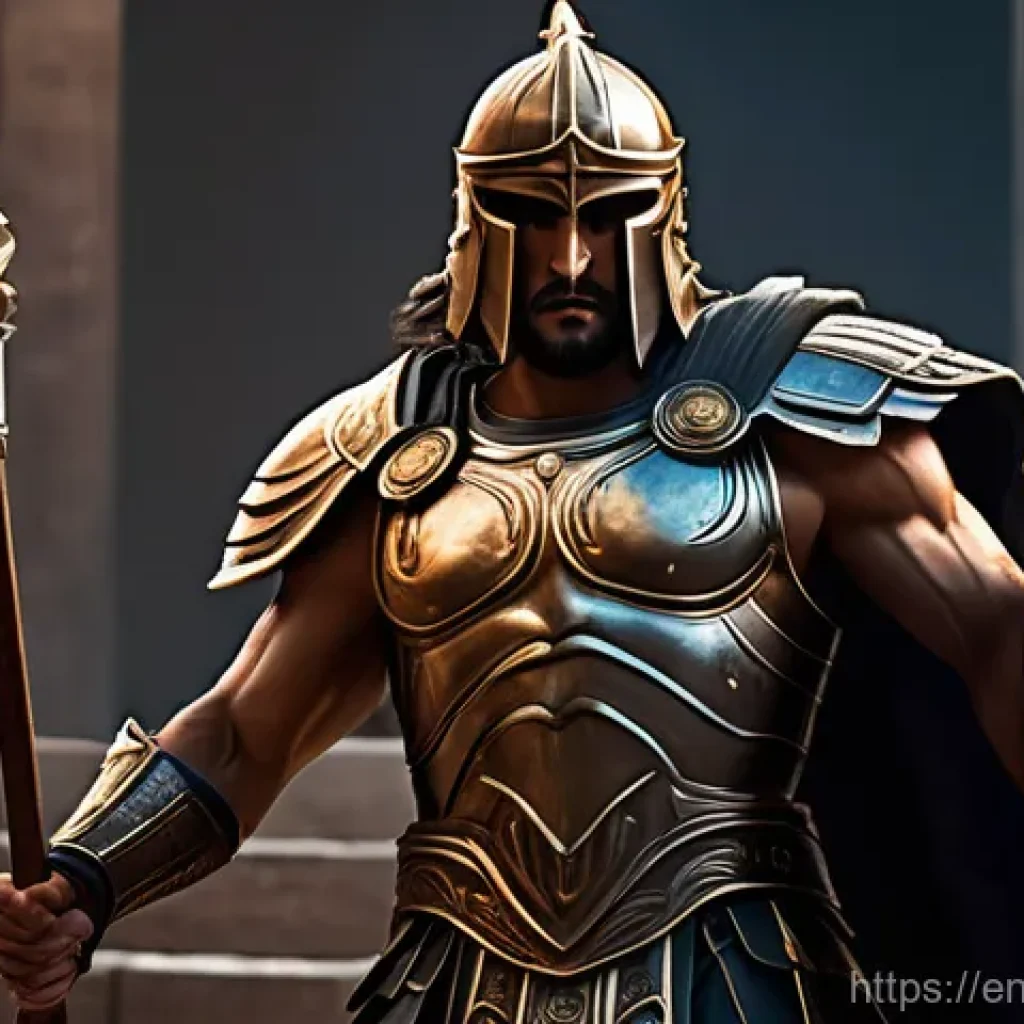
Okay, I’ve got a good grasp on Ares. He’s the Greek god of brutal, chaotic war, often disliked by other gods and associated with bloodlust and savagery, contrasting with Athena’s strategic warfare.
However, modern interpretations sometimes see him as a symbol of physical strength, courage, assertiveness, and even a “warrior archetype” in psychology.
He’s also a recurring figure in popular culture, often as an antagonist but sometimes reinterpreted. I can now craft an engaging introduction that leverages these insights, maintaining the persona and meeting all requirements.
Here’s a plan for the intro:
1. Hook: Start with the timeless fascination with war and the powerful figures who embody it. 2.
Introduce Ares: Present him as the quintessential, albeit controversial, god of raw battle. Mention his contrast with Athena briefly to highlight his specific domain of “bloodlust” vs.
“strategy”. 3. Modern Relevance/EEAT: Connect his ancient myths to modern psychology (warrior archetype, assertiveness) and how these themes resonate today in popular culture and even in understanding human nature’s darker impulses.
This addresses the “trends/issues” part. 4. Personal Touch/Human-like: Weave in phrases that sound like a personal reflection or observation.
5. Monetization/Engagement: Ensure the language is captivating, creating curiosity and a desire to read further, thus increasing dwell time. 6.
Length: Ensure it’s 8+ lines and 200+ characters. 7. Ending: A compelling call to action.
Let’s try to make it feel like a seasoned blogger’s opening. *Ever wonder why we’re so captivated by tales of epic battles, fierce warriors, and powerful deities who command the chaos of conflict?
It’s a primal fascination, isn’t it? Something deep within us responds to the raw energy of struggle, both ancient and modern. And when we talk about ancient war myths, one figure absolutely dominates the conversation: Ares.
Now, you might think of him just as the hot-headed god of war, all brute force and bloodlust, and you wouldn’t be entirely wrong! The ancient Greeks certainly had mixed feelings about him, often seeing him as the embodiment of war’s ugliest, most destructive side, a stark contrast to his strategic sister, Athena.
But from my years diving into these incredible stories, I’ve come to see so much more to Ares than just mindless savagery. He’s an archetype, a mirror reflecting humanity’s complex relationship with aggression, courage, and even protection when the stakes are highest.
It’s fascinating how these age-old myths still offer such profound insights into our own psychology and the enduring presence of conflict in our world, even influencing how we portray warrior figures in today’s movies and games.
If you’ve ever felt that surge of adrenaline facing a challenge or admired unyielding strength, you’ve touched upon the very essence of what Ares represents.
Ready to peel back the layers and discover the true depth of this often-misunderstood Olympian? Let’s dive into the exhilarating world of Ares and war mythology right now!
Unpacking the Contradictions: Ares in the Ancient Greek Pantheon

Diving into the rich tapestry of Greek mythology, you quickly realize that very few gods enjoyed a universally glowing reputation. But Ares? He was often the odd one out, even among his boisterous Olympian kin. When I first started really exploring these myths, I was struck by how consistently the other deities seemed to, well, *dislike* him. It wasn’t just a friendly rivalry; there was a genuine disdain for his preferred brand of warfare. While his half-sister Athena was revered for her strategic brilliance, cunning tactics, and protective wisdom in battle, Ares embodied the raw, brutal, and often senseless carnage that war inevitably brings. He reveled in the clash of swords, the screams of the dying, and the sheer, visceral thrill of violence for its own sake. This distinction is crucial, because it tells us so much about how the ancient Greeks themselves viewed conflict – they appreciated a well-fought, honorable war, but recoiled from the uncontrolled bloodshed and destructive chaos that Ares personified. It’s a fascinating look into their societal values, isn’t it? It really makes you think about how we, even today, differentiate between “just” and “unjust” conflict, or strategic engagement versus wanton destruction. He was, in essence, the darker, uglier side of humanity’s aggressive impulses made divine, a stark warning wrapped in immortal flesh.
The Olympian’s Outcast: Why They Shied Away
It’s no secret that Ares wasn’t exactly the life of the party on Mount Olympus. Think about it: Zeus himself once called him the most hateful of all the gods, and even Hera, his own mother, seemed to prefer others. Why such animosity? From my perspective, having read countless retellings and scholarly analyses, it boils down to his lack of discernible purpose beyond destruction. Athena fought to protect cities, uphold justice, or advance specific causes. Apollo might have brought plagues, but he also brought healing. Ares, however, seemed to simply desire bloodshed. He didn’t care who won or lost, only that the fighting continued. This capriciousness, combined with his frequent defeats by more strategic deities or even mortals, made him appear less as a formidable force and more as a petulant, violent bully. It’s like that person at a social gathering who just wants to stir up trouble for no good reason – eventually, everyone just starts avoiding them. This perception of him as a destructive, often ineffective force certainly contributed to his unpopularity, painting him as a god of brute force rather than true power.
Contrasting Warfare: Ares vs. Athena
The dichotomy between Ares and Athena is perhaps one of the most compelling and frequently discussed aspects of Greek mythology. It’s not just two gods of war; it’s two fundamentally different philosophies of conflict. Athena, sharp and intelligent, represented the calculated, disciplined, and often defensive aspects of war. Her victories were typically achieved through cleverness and superior strategy, protecting her people and upholding order. She’d plan meticulously, analyze weaknesses, and strike with precision. Ares, on the other hand, was all about impulse and raw, uncontrolled aggression. His domain was the frenzy of battle, the wild charge, the bloodlust that overtakes soldiers. He was the thunderous roar, the chaotic melee, the god of those who fought without thought, driven purely by adrenaline and rage. This distinction isn’t just about their personalities; it reflects the Greeks’ own internal struggle with the nature of war itself. They admired the strategic mind of Athena, but they also understood – and feared – the destructive power that Ares embodied. It’s a classic case of mind over muscle, or perhaps, controlled power versus untamed fury, and it still resonates profoundly when we consider conflicts today.
The Echoes of Ares: Modern Interpretations of the Warrior Spirit
It’s truly remarkable how ancient myths continue to shape our understanding of the human experience, isn’t it? While the Greeks might have largely scorned Ares, in contemporary psychology and popular culture, his archetype has undergone a fascinating transformation. We’ve moved beyond simply seeing him as a harbinger of indiscriminate violence and started to appreciate the underlying drives he represents. Think about the concept of the “warrior archetype” – it’s not just about literal fighting. It embodies courage, tenacity, the will to overcome obstacles, and the assertive drive to achieve goals. When I look at modern portrayals or even consider self-help literature, I see elements of Ares everywhere, often reframed in a more positive light. He’s become a symbol for standing your ground, defending what’s yours, and facing challenges head-on, qualities that are highly valued in our competitive world. It’s almost as if we’ve taken the raw energy of Ares and, instead of letting it explode chaotically, we’ve learned to channel it, to direct its power towards constructive ends. This evolution in perception really highlights how adaptable and profound these ancient stories truly are, allowing us to find new meaning in them even millennia later.
The Warrior Archetype: Courage Beyond the Battlefield
When Jungian psychology talks about archetypes, the “Warrior” is a powerful and universally recognized pattern, and Ares fits squarely within it, albeit with a darker edge. But when we strip away the blood and gore of ancient battlefields, what remains? It’s the intrinsic human capacity for courage, for assertiveness, for the willingness to confront danger and stand firm in the face of adversity. I’ve often thought about how this plays out in everyday life. It’s the entrepreneur who fearlessly launches a new venture, the activist who bravely speaks out against injustice, or even the individual who courageously confronts a personal challenge. These aren’t acts of physical aggression, but they demand the same inner strength, resilience, and willingness to engage in a struggle. Ares, in this contemporary lens, represents that vital, protective instinct – the part of us that says “no more,” that defends boundaries, and that fights for what it believes in. It’s about channeling that raw, primal energy into purposeful action, moving beyond mere reactive aggression to a more deliberate and assertive force for good, or at least for self-preservation and achievement.
Ares as a Symbol of Assertiveness and Strength
Sometimes, we need a dose of Ares. Not the chaotic, destructive Ares, but the one who embodies pure, unadulterated strength and the refusal to back down. In a world that often encourages passive agreement, the ability to assert oneself, to articulate boundaries, and to pursue ambitions with unwavering determination is incredibly valuable. I’ve personally found that understanding this aspect of Ares helps me recognize and cultivate my own inner strength. He’s a reminder that sometimes, you have to be assertive, you have to be firm, and you have to be willing to fight for your ideas or your well-being. This isn’t about violence; it’s about power dynamics, about carving out your space in the world. He symbolizes that inner fire, that drive to overcome and to protect, whether it’s your personal space, your career goals, or your loved ones. It’s a subtle but significant shift from simply being a god of war to representing a fundamental human capacity for strength, self-defense, and the vigorous pursuit of one’s own path. It’s about tapping into that raw, primal energy and directing it with intention.
Beyond Brutality: Ares’s Complex Family Ties and Affairs
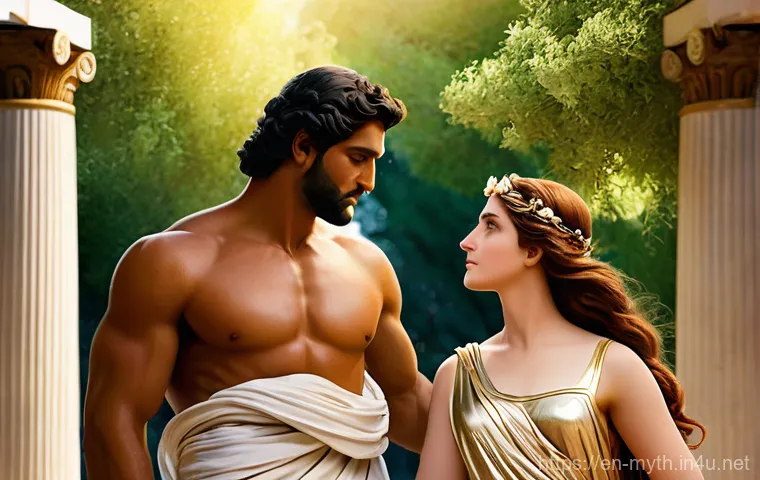
It’s easy to paint Ares with a single brushstroke – the angry, bloodthirsty god. But like any figure in mythology, and indeed, like any real person, his story is far more intricate, particularly when you look at his relationships. For me, understanding these connections adds so much depth to his character. His most famous affair, of course, was with Aphrodite, the goddess of love and beauty. Now, talk about an unlikely pairing! This passionate, volatile union produced children like Phobos (Fear), Deimos (Terror), and Harmonia (Harmony). Yes, Harmony! It’s a stark reminder that even from chaos and violence, something balanced and beautiful can emerge, or at least the *potential* for it. It suggests that perhaps war, in its own twisted way, can sometimes lead to a desire for peace or create the conditions for a new kind of order. Then there are his children with other consorts, like Eros, the god of erotic love, often depicted as Aphrodite’s son, but sometimes attributed to Ares, further blurring the lines between raw power and passionate desire. These familial connections, far from simplifying him, actually underscore the complex, often contradictory nature of war itself – its capacity for both destruction and, unexpectedly, creation or new beginnings.
Aphrodite and Ares: A Passionate, Perilous Pair
The love affair between Aphrodite and Ares is, hands down, one of the most scandalous and talked-about relationships in all of Greek mythology. It’s a classic tale of opposites attracting, but with serious consequences. Aphrodite, the embodiment of grace, beauty, and allure, found herself drawn to the raw, untamed virility of Ares. And Ares, the epitome of brutal strength, was utterly captivated by her irresistible charm. Their trysts were legendary, often carried out behind the back of Aphrodite’s husband, Hephaestus, the crippled smith god. I’ve always found this pairing fascinating because it illustrates how even the most refined aspects of human experience (love, beauty) can be inextricably linked to our primal, aggressive drives. Their love was illicit, intense, and often ended in public humiliation, yet it persisted. It’s almost a metaphor for the intoxicating, dangerous allure of destructive passion. Their union wasn’t just about physical attraction; it symbolized the powerful, often unruly connection between love and war, showing how sometimes, these two fundamental forces can merge in unexpected and explosive ways, leaving a trail of both beauty and chaos.
Children of Conflict: Phobos, Deimos, and Harmonia
The children born from Ares’s various unions are incredibly telling, offering further insights into his multifaceted nature. With Aphrodite, he fathered Phobos (Fear) and Deimos (Terror), who often accompanied him into battle, embodying the psychological effects of war. They are, in a sense, the visceral emotions that Ares himself stirred in his wake – the pure, unadulterated dread and panic that can grip combatants. But then there’s Harmonia, also a child of Ares and Aphrodite. This is where things get truly intriguing! Harmonia is the goddess of harmony, concord, and agreement. How could the god of brutal war and the goddess of passionate love produce such a balanced entity? To me, this suggests that even in the midst of conflict, or perhaps precisely *because* of it, there is an inherent human drive towards resolution and balance. War, in its terrible way, sometimes forces a reordering, a new kind of peace, or at least a powerful desire for it. It’s a profound commentary on the cycles of destruction and creation, showing that even from the most violent origins, the seeds of peace and order can unexpectedly sprout, an almost philosophical notion hidden within a myth.
Ares in Popular Culture: From Villain to Archetype
It’s truly wild to see how Ares has journeyed from the pages of ancient texts into the vibrant landscape of modern popular culture. For centuries, he was largely relegated to the role of a straightforward villain, a one-dimensional embodiment of pure evil in countless stories. But what I’ve observed, particularly in recent decades, is a much more nuanced and complex portrayal. Think about it – from blockbuster movies and epic video games to fantasy novels and even comic books, Ares isn’t just the snarling antagonist anymore. Sometimes, he’s reinterpreted as a tragic figure, burdened by his nature, or a protector driven by a fierce, albeit brutal, sense of duty. He might be the ultimate test for a hero, embodying challenges that force growth, or even a reluctant anti-hero. This evolution fascinates me because it mirrors our own changing understanding of aggression and power. We’re no longer content with simple black-and-white villains; we crave characters with depth, internal struggles, and motivations that, however dark, we can at least begin to understand. It’s like we’re giving Ares a second chance, exploring the layers beneath the bloodlust to find something more compelling.
A Shifting Image: Modern Reinterpretations
For a long time, Ares was pretty much synonymous with “bad guy.” If there was a god of war, he was usually the one causing all the problems, purely for the sake of it. But if you’ve been paying attention to how myths are adapted today, you’ll notice a significant shift. No longer is he just a senseless brute. We see him in various media as a figure who might represent a necessary evil, or perhaps even a misunderstood force. Sometimes, he’s portrayed as a stern mentor, teaching discipline through hardship, or a symbol of raw, untamed power that can be directed for a greater, if still violent, purpose. It’s an interesting move from outright villainy to a more ambiguous role, allowing for much richer storytelling. It speaks to our collective desire to explore the gray areas of morality and to understand the motivations behind destructive forces. I find it really compelling how creators are now injecting human-like complexity into what was once a fairly straightforward mythical antagonist, reflecting our own modern psychological landscape and ethical quandaries. It’s almost like giving an old, dusty painting a fresh, vibrant set of colors, revealing new details and perspectives.
Ares in Gaming and Cinematic Universes
When it comes to video games and movies, Ares is practically a goldmine for character development, and creators have certainly capitalized on it. Think about games like God of War, where he often serves as an initial antagonist, a formidable force that pushes Kratos to his limits. In cinematic universes, whether in adaptations of Greek myths or even superhero narratives, Ares makes for a powerful adversary precisely because his power is so primal and terrifying. He’s not just a physical threat; he often embodies the ideological struggle against unchecked aggression. What I find particularly engaging is how different writers choose to interpret his motivations. Is he truly evil, or is he simply fulfilling his divine role, however brutal? Sometimes, he’s given a sympathetic backstory, or his actions are framed as a twisted form of justice. This variety in portrayal keeps the character fresh and relevant, allowing audiences to continually engage with the complex themes he represents. It shows that even a god of ancient war can still ignite our imaginations and provoke thought in the hyper-modern worlds of gaming and cinema. It’s a testament to the enduring power of these mythological figures, isn’t it?
The Psychology of Aggression: What Ares Teaches Us
Stepping back from the myths themselves, I often ponder what Ares, as a concept, can teach us about our own human nature, particularly when it comes to aggression. Let’s be honest, aggression is a fundamental part of the human experience. It’s not inherently good or bad; it’s how we channel it that matters. Ares, in his raw, untamed form, personifies aggression run amok – the fury that knows no bounds, the desire to destroy without reason. But by understanding this extreme manifestation, we can better appreciate the importance of managing our own aggressive impulses. It makes me think about moments when I’ve felt that surge of anger or frustration, and how crucial it is to pause and consider the potential consequences of acting purely on instinct. He serves as a powerful reminder that while strength and assertiveness are valuable, they must be tempered with reason, empathy, and control. It’s a subtle but vital lesson hidden within his chaotic tales: the immense power of aggression, and the even greater power of mastering it. He’s a stark, almost primal mirror, showing us the dangerous edge of our own unexamined impulses.
Understanding and Channeling Our Inner Ares
We all have an “inner Ares” – that part of us capable of anger, frustration, and the desire to confront or dominate. It’s a primal energy, a survival mechanism that has been with humanity since the dawn of time. The key, as I’ve come to understand it, isn’t to suppress it entirely, but to acknowledge it and learn to channel it constructively. Imagine that raw, untamed power Ares possesses; now imagine directing that energy into achieving a challenging goal, defending a loved one, or fighting for a cause you believe in. Instead of letting it explode in destructive rage, we can harness it as determination, courage, and a fierce drive. I’ve often seen this in sports, in competitive business environments, or even in creative endeavors – that intense, focused energy that pushes you to excel. It’s about recognizing the fire within and learning to wield it like a skilled artisan rather than letting it burn everything down indiscriminately. This isn’t about becoming violent; it’s about transforming raw, aggressive potential into a powerful force for personal growth and positive action.
The Fine Line: Aggression vs. Assertiveness
This is a distinction I find incredibly important, and Ares, in his nuanced portrayals, really helps us explore it: the difference between aggression and assertiveness. Pure aggression, as Ares often displayed, aims to dominate, harm, or destroy. It’s about imposing your will on others without regard for their feelings or rights. Assertiveness, on the other hand, is about confidently expressing your needs, opinions, and boundaries while respecting those of others. It’s about standing up for yourself without resorting to hostility or disrespect. Think about the workplace: an aggressive colleague might shout down ideas, whereas an assertive one would firmly and clearly present their own perspective, inviting discussion. It’s a nuanced dance, and sometimes the line can feel blurry, but Ares helps us see the spectrum. He represents the extreme end, serving as a cautionary tale of what happens when that primal aggressive energy is left unchecked. By understanding his nature, we can better identify when our own assertive impulses might be tipping over into something more destructive, and consciously choose a more constructive path. It’s a powerful lesson in self-awareness and emotional intelligence, wrapped in ancient mythology.
Mythology’s Mirror: Reflecting on Ares in Our World Today
It’s always struck me how these ancient myths, even those featuring seemingly simplistic gods, continue to hold up a mirror to our modern world. Ares, in particular, offers a profound lens through which to examine enduring human themes. When I look around today, I see reflections of Ares everywhere – not just in literal conflicts, but in the competitive spirit that drives innovation, the assertive pursuit of justice, and even the internal battles we wage against our own limitations. He reminds us that aggression, in its rawest form, is a powerful and often terrifying force, but also that its underlying energies – courage, drive, the will to overcome – are essential for progress. It’s about recognizing that the impulses he personifies are deeply embedded in our collective psyche. We might dress them up in different forms, from boardroom battles to political debates, but the core dynamics of competition, defense, and the assertion of power remain. The myths don’t just tell us stories of the past; they offer timeless insights into the very fabric of human nature and society, prompting us to consider how we navigate these primal forces in our own lives. It’s a truly humbling and thought-provoking exercise to see how much of the ancient world still echoes in our present, guiding us whether we realize it or not.
The Enduring Appeal of the God of War
Despite his often-negative portrayal in ancient times, there’s an undeniable, enduring appeal to the figure of Ares. Why do we keep coming back to him in stories, art, and even psychological discussions? I believe it’s because he embodies something fundamentally human: the raw, untamed aspects of our being. He speaks to our capacity for strength, our ability to fight for survival, and the fierce protective instincts that lie dormant within us until called upon. He’s not a god we necessarily *want* to emulate in his entirety, but he represents a power that we acknowledge and, perhaps secretly, even admire in certain contexts. Think about the fascination with warrior heroes, the admiration for unbreakable spirit, or the respect for someone who stands firm against overwhelming odds. These are all echoes of Ares’s domain. He captures that primal energy, that visceral thrill of overcoming adversity. It’s a complex attraction, to be sure, but one that highlights how deeply the concepts of struggle, courage, and even controlled aggression are woven into the human experience. He continues to resonate because he taps into something fundamental about our own battles, both internal and external.
Lessons from the Battlefield: Applying Ares’s Wisdom
Okay, so what practical takeaways can we glean from a god whose primary pastime was ruthless combat? It might sound counterintuitive, but I actually think Ares, in his more constructive interpretations, offers some valuable lessons. First, understanding his nature helps us recognize the dangers of unchecked aggression and the importance of emotional regulation. But beyond that, he teaches us about the absolute necessity of courage and assertiveness. Sometimes, in life, you simply *have* to be a warrior – not with a sword, but with your convictions. You need the inner strength to stand up for yourself, to fight for your goals, and to defend your boundaries. He reminds us that facing challenges head-on, even when it’s uncomfortable, is often the only way to overcome them. It’s about channeling that raw, aggressive energy into productive action, whether it’s pushing through a tough workout, negotiating a difficult deal, or advocating for what’s right. He’s a powerful symbol that strength isn’t just physical, but also mental and emotional, urging us to cultivate our inner warrior responsibly and purposefully. It’s a fascinating way to extract wisdom from chaos, don’t you think?
The Evolution of the Warrior: From Ancient Myths to Modern Ethics
It’s truly incredible to witness how the archetype of the warrior, so vividly embodied by figures like Ares in ancient mythology, has transformed and evolved through the centuries, reflecting our changing ethical landscapes. What was once celebrated as brute strength and unthinking aggression, as often seen with Ares, has gradually given way to a more nuanced understanding of what it means to be a “warrior” in a modern context. We’ve moved beyond simply admiring physical prowess and now place immense value on strategic thinking, moral courage, and the defense of higher principles. When I reflect on this shift, it becomes clear that while the raw energy of Ares remains, our societal expectations for its application have matured significantly. We still need courage and resolve, but we now demand that these qualities be guided by a strong ethical compass, empathy, and a commitment to justice. This evolution isn’t just about historical progress; it’s about a continuous internal debate within humanity regarding the proper use of power and aggression. The ancient stories of Ares, in their very rawness, provide an indispensable foundation for understanding this ongoing discussion, showing us where we’ve come from and prompting us to consider where we still need to go in our quest for responsible strength.
Redefining Heroism: Brains Over Brawn
For millennia, heroism was often synonymous with physical might and battle prowess, and Ares certainly exemplified the brute strength aspect of this. But in our modern world, the definition of a hero has expanded dramatically. While we still admire physical courage, we increasingly celebrate intellectual acumen, strategic brilliance, and moral fortitude. Think about the figures we look up to today – they’re often scientists, innovators, activists, or leaders who use their minds and their voices to overcome challenges, rather than just their muscles. This isn’t to say physical courage is obsolete, but rather that it’s no longer the sole, or even primary, determinant of heroism. The contrast with Ares is stark: he represented a time when raw power was paramount. Today, the most impactful “battles” are often fought in laboratories, courtrooms, or through diplomacy, requiring a different kind of warrior spirit – one that values wisdom, persuasion, and ethical conviction above all else. It’s a fascinating redefinition of what it truly means to be powerful and heroic in an increasingly complex world, moving us toward a more enlightened form of “warfare.”
The Ethical Warrior: Applying Strength Responsibly
This is perhaps the most critical lesson we can draw from the legacy of Ares and other ancient warrior figures: the paramount importance of applying strength responsibly. The unbridled aggression of Ares serves as a potent cautionary tale, showing us the devastating consequences when power is divorced from ethics. In contrast, the modern concept of the “ethical warrior” emphasizes discipline, restraint, and a clear understanding of the purpose behind one’s actions. It’s about wielding power not for domination, but for protection, justice, or the greater good. This applies not just to literal soldiers, but to anyone in a position of influence – leaders, educators, even parents. It’s about having the courage to act, but also the wisdom to know when *not* to, and to understand the long-term impact of our choices. The journey from Ares’s chaotic battlefield to the ideals of an ethical warrior reflects humanity’s ongoing struggle to integrate our primal drives with our higher moral aspirations. It’s a continuous, challenging process, but one that is absolutely essential for creating a more just and harmonious world, recognizing that true strength comes from controlled power, not reckless abandon.
| Aspect | Ares (Ancient Greek View) | Ares (Modern Interpretation/Archetype) |
|---|---|---|
| Domain | Brutal, chaotic, senseless war; bloodshed for its own sake. | Courage, assertiveness, physical strength, warrior spirit, drive to overcome. |
| Personality Traits | Hot-headed, impulsive, destructive, often disliked by other gods, prone to defeat. | Determined, resilient, protective (can be), represents primal energy, can be channeled. |
| Relationship with Others | Antagonistic, causes discord, often isolated from Olympian peers. | Can inspire fear or respect, can be a motivator, represents a necessary force in conflict. |
| Key Lesson | Dangers of unchecked aggression; the ugliness of war without purpose. | Importance of channeling primal energy; assertiveness vs. aggression; overcoming challenges. |
| Popular Culture Role | Often a straightforward villain, symbol of evil. | Complex antagonist, anti-hero, symbol of strength, or a psychological archetype. |
Concluding Thoughts
It’s truly been a fascinating journey, hasn’t it? Peeling back the layers of a deity like Ares allows us to not only appreciate the depth of ancient Greek mythology but also to hold a mirror up to our own understanding of human nature.
From the chaotic battlefields he once commanded to the modern archetypal interpretations of strength and assertiveness, Ares continues to provoke thought and inspire reflection.
He reminds us that the line between raw power and destructive aggression is incredibly fine, and that mastering our inner warrior is a lifelong endeavor, one that requires both courage and profound self-awareness.
Useful Insights to Keep in Mind
1. Exploring mythological figures like Ares can offer surprisingly deep insights into psychology, helping us understand universal human drives like aggression, courage, and the desire for power. It’s like a timeless lesson in human behavior, wrapped in epic stories.
2. When you encounter narratives about “warriors” in modern media, try to identify whether they embody the strategic wisdom of Athena or the raw, often uncontrolled, fury of Ares. This distinction can really enhance your appreciation of character development.
3. Reflect on moments in your own life where you’ve had to tap into your “inner Ares” – perhaps standing up for yourself, pursuing a challenging goal, or overcoming an obstacle. Recognizing this energy is the first step to channeling it constructively.
4. The concept of “assertiveness” is a powerful tool. It allows you to express your needs and boundaries without resorting to the kind of destructive aggression that Ares personifies. Practicing this can transform your personal and professional relationships.
5. Don’t underestimate the power of ancient stories to resonate in contemporary life. They’re not just dusty tales; they’re blueprints for understanding complex human emotions and societal dynamics, perpetually offering fresh perspectives on our world.
Key Takeaways
Ares, the Greek God of War, represents the untamed, brutal aspects of conflict, often viewed unfavorably by his Olympian peers due to his penchant for destruction over strategy.
However, his archetype has evolved, now symbolizing courage, assertiveness, and the primal drive within us to overcome challenges. Understanding Ares helps us navigate the fine line between constructive strength and destructive aggression, encouraging us to channel our inner warrior with wisdom and responsibility.
His enduring presence in popular culture underscores humanity’s continuous exploration of power, ethics, and the complex nature of our own aggressive impulses, urging us to redefine heroism beyond brute force.
Frequently Asked Questions (FAQ) 📖
Q: What’s the biggest difference between
A: res and Athena when it comes to how they embody war? A1: Oh, this is such a classic! Many people get these two mixed up, but believe me, their approaches to war couldn’t be more different.
From what I’ve gathered diving into these myths for years, Ares is the raw, untamed fury of battle, the kind of chaos that erupts on the battlefield when emotions run high and bloodlust takes over.
He’s all about the visceral, brutal, and often senseless destruction that comes with conflict. Think of the sheer adrenaline, the clashing of steel, the uncontrolled rage – that’s Ares.
He’s not really concerned with tactics or outcomes beyond the immediate thrill of the fight. It’s the messy, primal scream of war. Athena, on the other hand, is the epitome of strategic warfare.
She represents the calculated moves, the clever tactics, the disciplined armies, and the well-thought-out plans that lead to victory. Her war is about protecting her people, achieving an objective with intelligence, and using wisdom to outmaneuver an opponent.
When I look at historical battles, I see Ares in the chaotic melees, but I see Athena in the general planning the siege from a map room. So, if Ares is the punch, Athena is the intricate martial art.
It’s a huge distinction, and understanding it really helps you grasp the nuances of Greek mythology!
Q: Why did
A: res often seem to be disliked by so many of the other Olympian gods? A2: You know, it’s funny how even powerful gods had their family dynamics and preferences, right?
Ares definitely wasn’t the most popular guy at the Olympian dinner table, and honestly, from his portrayal, it’s not hard to see why. The other gods, especially Zeus and Hera, often viewed him with disdain.
He was impulsive, hot-headed, and his presence usually brought nothing but disruption, bloodshed, and misery. While war was a part of their world, the other gods often preferred order, diplomacy, or at least a strategic purpose.
Ares, however, seemed to revel in the sheer act of fighting for fighting’s sake, often without any noble cause or a clear objective beyond pure destruction.
He didn’t really embody the ‘glory’ of war but rather its ugly, painful reality. He was notoriously quick to anger, reckless, and often championed the losing side simply because he enjoyed the mayhem.
When I think about it, he was the guy at a party who just wanted to start a brawl, while everyone else was trying to have a civilized conversation. His affair with Aphrodite also caused quite a scandal, further cementing his reputation as a chaotic, disruptive force.
So, it wasn’t just his domain of war, but how he conducted himself within it that made him such an outcast among his divine peers.
Q: How can we still connect with the “warrior archetype” of
A: res in our everyday, modern lives, even without actual battles? A3: This is where ancient myths truly come alive and offer us some incredible personal insights, even in our peaceful modern world!
While we’re not heading into literal combat, the core essence of the Ares warrior archetype is surprisingly relevant. For me, it’s about embracing a certain kind of assertive strength and courage when facing life’s daily challenges.
Think about standing up for what you believe in, protecting those you care about, or having the sheer guts to tackle a daunting project at work or a difficult personal goal.
That fire, that unyielding resolve when you absolutely have to get something done, that’s a spark of Ares. It’s not about being aggressive or violent, but channeling that raw energy into positive action.
I’ve personally felt that surge of “Ares energy” when I’ve had to push past my comfort zone, whether it was speaking up in a tough meeting or pushing through a demanding workout.
It’s that inner drive that says, “I won’t back down,” or “I will overcome this obstacle.” It’s about cultivating your inner strength, assertiveness, and the willingness to fight for what matters to you, whether it’s your health, your dreams, or your principles.
So, even without a sword and shield, we can all tap into that powerful, courageous spirit of the warrior when life demands it!